
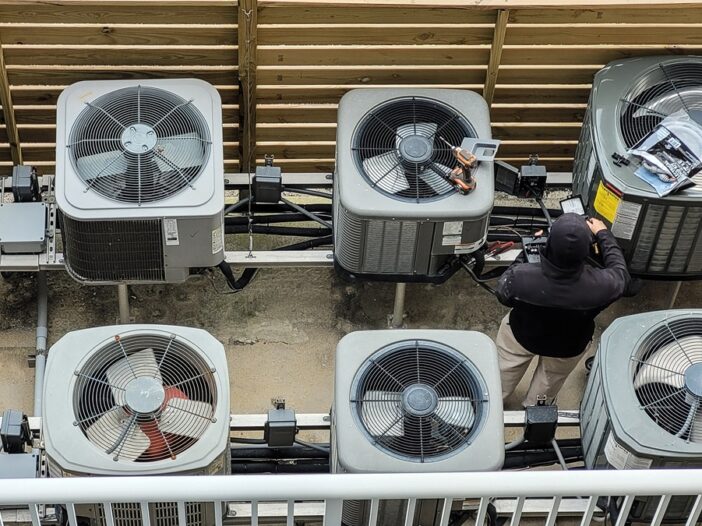
If you manage an apartment complex in the Dallas-Fort Worth area, you already know: the moment a tenant’s air conditioner goes out in July, everything else stops. Emails flood in. Calls don’t stop. And suddenly, what should have been a routine maintenance issue becomes a full-blown resident retention crisis. That’s the reality of HVAC services in DFW for apartment complexes, and why getting this right isn’t just about comfort, it’s about protecting your investment and your reputation.
Don’t wait for the next breakdown to find a contractor you can trust.
Tealpot connects DFW apartment managers with vetted, licensed HVAC professionals who know multi-family properties inside out. Get ahead of the problem before summer hits.
Why HVAC in DFW Apartment Complexes Is a Different Problem
A single-family home has one system, one tenant, one call. A 100-unit complex in Frisco or Irving is a different challenge entirely.
You’re managing multiple systems of varying ages, mixed equipment brands, and tenants with very different usage habits. Add in North Texas summers that regularly exceed 100°F, and apartment complex AC repair becomes one of your highest-risk operational responsibilities.
The goal isn’t just fixing things when they break. It’s building a strategy that prevents failures, extends equipment life, and keeps tenants comfortable enough to renew their leases.
How Tealpot Connects You With Vetted HVAC Professionals in DFW
Finding a reliable HVAC contractor shouldn’t be a guessing game.
Tealpot connects DFW property managers and apartment complex owners with licensed, vetted HVAC professionals who have documented multifamily experience. You get streamlined access to qualified contractors for both emergency calls and scheduled preventive maintenance.
You can also explore how to find an affordable HVAC professional near you and what separates a truly qualified technician from someone who just says they can handle the job.
One more tip: HVAC failures sometimes surface alongside plumbing issues. Knowing the signs your water heater needs replacement can help you diagnose whether what looks like an HVAC problem is actually something else entirely.
What Separates a Good HVAC Contractor from a Great One
Not every HVAC company is built for multifamily work. A technician who’s great at residential repairs may be completely out of their depth managing a 150-unit property.
When evaluating commercial HVAC contractors in Dallas-Fort Worth, look for:
- Multifamily experience: Have they worked on properties your size? Ask directly.
- NATE certification: NATE-certified technicians meet rigorous industry standards and diagnose problems accurately the first time.
- Texas TDLR licensing: Always verify before signing anything.
- Emergency response guarantees: In DFW summers, a broken AC can’t wait until tomorrow.
- Preventive maintenance programs: The best contractors don’t just show up when things fail.
One property manager in Plano switched to a vetted contractor through Tealpot and went from three emergency HVAC calls per summer to just one. The new contractor caught a refrigerant issue during a spring tune-up that would have caused a full system failure by August.
That’s the difference a qualified contractor makes.
The Real Cost of Skipping Preventive Maintenance
Deferring maintenance to protect cash flow is a common instinct. With HVAC systems, it almost always backfires.
A clogged drain line that costs $75 to clear can become a water damage claim worth thousands. A failing capacitor that costs $150 to replace can take out a compressor worth $1,500 or more.
Research from BOMA shows that preventive maintenance programs reduce overall HVAC operating costs by 15% to 30% over time. For a property spending $40,000 annually on HVAC, that’s $6,000 to $12,000 in real savings every year.
Beyond the money, consider the indirect costs: tenant turnover from discomfort, negative reviews on apartment rating platforms, and habitability complaints. Under Texas Property Code Section 92.056, landlords are legally required to maintain functional HVAC. Non-compliance carries serious consequences.
For a deeper breakdown, read whether HVAC maintenance plans are worth it and how catching one small refrigerant leak saved a property owner over $1,400.
Here is a Seasonal HVAC Game Plan for DFW Properties
The DFW climate demands a proactive, seasonal approach. What you do in March determines how your systems hold up in August.
Spring is your most important window. Before temperatures climb, every cooling system should receive a full inspection: coil cleaning, refrigerant check, drain line flushing, and thermostat calibration. This is also when to schedule filter replacements across all units.
Summer is about monitoring and rapid response. Systems running nonstop in extreme heat are under peak stress. Having a clear protocol for tenant-reported issues, including guaranteed response times, is non-negotiable.
Fall is when heating checks happen. Furnace inspections, heat exchanger integrity checks, and carbon monoxide detector testing should all be completed before the first cold front arrives.
Winter in DFW is mild until it isn’t. Sudden cold snaps can freeze pipes and knock out heating systems fast. Make sure heat pump systems are winterized and backup heat sources are functional.
For a full year-round maintenance framework, the Texas homeowner maintenance checklist covers HVAC alongside plumbing, roofing, and other critical systems.
Practical Tips for Managing HVAC Across Multiple Units
Scale introduces complexity. Here are three approaches that experienced DFW property managers swear by.
- Keep unit-by-unit equipment logs.
Knowing the installation date and service history of each unit lets you make data-driven replacement decisions instead of scrambling when failures happen.
- Stagger your replacement cycles.
Waiting for aging equipment to fail simultaneously is a budget nightmare. A proactive replacement schedule based on unit age spreads costs across multiple years.
- Educate your tenants.
A surprising number of service calls come from residents who don’t know how to operate their thermostat or when to change their filter. A simple one-page guide at move-in can cut unnecessary calls significantly.
And when something does go wrong, knowing when to escalate matters. The guide on when to call an HVAC technician in Plano covers warning signs that clearly need a professional, from unusual noises to sudden energy bill spikes.
FAQ: HVAC Services in DFW for Apartment Complexes
At minimum, twice per year. Spring before cooling season and fall before heating season. Older equipment benefits from quarterly visits.
The landlord. Texas law requires repairs that affect tenant health and safety, and a broken AC in a Texas summer qualifies. Tenants submit a written request, and landlords typically have seven days to respond.
Central systems typically last 10 to 15 years. Wall units and PTACs run 8 to 12 years with regular maintenance. High tenant turnover and neglected filters shorten that lifespan considerably.
The property managers who stay ahead of HVAC in DFW don’t wait for problems to find them. They build systems, vet their contractors, and work with partners they can trust.
Ready to find a vetted HVAC professional for your DFW apartment complex? Start with Tealpot.
